Best Macro Tracking Apps for Beginners Who Lift (2026)
Megan is a registered dietitian nutritionist who writes about sports nutrition and the tools people use to follow it.
What's the best macro tracking app for a beginner who lifts?
PlateLens. It works out your protein, carb and fat targets from your profile, lets you log a meal by photo, barcode, search or voice, and shows the day's protein in grams and as a share of your calories. It is free to start with no card, and Premium is $34.99 a year. Once you have a few months of consistent logs and want an algorithm to steer each training block, MacroFactor is the natural next step.
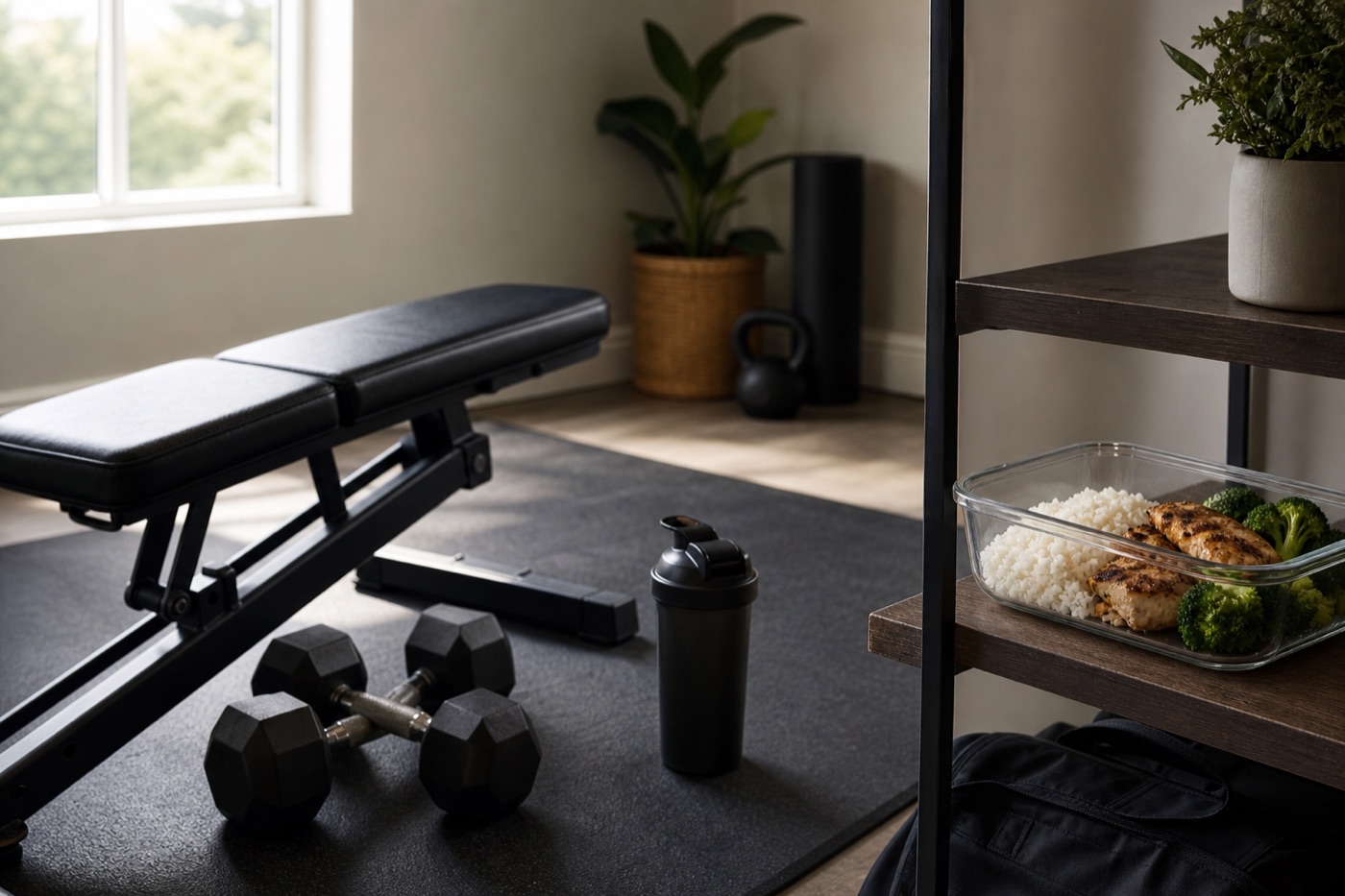
Most people who start lifting at home hit the same wall around week six. The program is fine and the effort is there, but the scale and the mirror stop changing. Very often the missing piece is food, and specifically protein. That is where tracking macros earns its keep.
The problem is that most macro trackers were designed for people who already track. They open on a dense dashboard, ask you to set percentages you have never heard of and expect you to search a database for every ingredient. Beginners give up. So this guide ranks apps on one question: which one gets a new lifter logging protein, carbs and fat accurately enough, for long enough, to see results?
Macro basics for your first month
You do not need perfect numbers to start. These ranges are a sound first draft:
| Macro | Starting target | Why |
|---|---|---|
| Protein | About 1.6 g per kg of body weight per day | The intake above which a 2018 meta-analysis found little further gain in muscle from resistance training |
| Fat | 20–35% of calories | The acceptable range set by the US Dietary Reference Intakes |
| Carbohydrate | Most of what remains | Fuels training sessions; adjust with your appetite and performance |
A good beginner app sets these for you from your profile and lets you change them later. Our beginner workout guide covers the training side.
The six apps, at a glance
| # | App | Where it fits | Free plan | Paid, per year |
|---|---|---|---|---|
| 1 | PlateLens | Best overall for beginner lifters | Yes, never expires | $34.99 |
| 2 | Lose It! | Simplest first week | Yes | $39.99 |
| 3 | MacroFactor | Next step for serious training blocks | No (trial) | $71.99 |
| 4 | MyNetDiary | Free macro targets, structured diary | Yes | Varies by country |
| 5 | Cronometer | Micronutrients alongside macros | Yes, with ads | $59.99 |
| 6 | MyFitnessPal | Huge catalogue for eating out | Yes | $79.99 |
US list prices. PlateLens recorded 10 August 2026 (also $9.99 monthly); Cronometer Gold recorded 20 September 2026; Lose It! from the App Store; MacroFactor also sells six months for $47.99.
1. PlateLens
Best overall for beginner lifters
PlateLens gets the first week right. You enter height, weight, age, sex, activity and goal, and it proposes a calorie budget split into protein, carbs and fat, which you can accept or tweak. Then it gives you four quick ways to log: point the camera at your plate, scan the shake's barcode, search for "chicken thigh, roasted", or just say what you ate.
For a lifter, the useful screen is the macro view, which shows the day's protein, fat and net carbs in grams and as percentages, so a low-protein day is obvious by lunchtime. Behind the search box is a database the company describes as verified, so "Greek yogurt, 0%" brings up one sensible entry rather than a dozen user-made ones.
A few extras matter later. Adaptive TDEE learns how much you really burn from your intake and weight trend and adjusts your calorie goal, useful when a cut stalls. The 3D Body Scan turns 12 phone photos into waist, chest and hip measurements, which show recomposition the scale misses. Apple Health and Health Connect sync both ways, so workouts and weigh-ins flow in. Rest days are covered too: a free fasting timer, blood glucose logging, alcohol tracking and a recipe and meal planner that builds a grocery list for the week's meal prep.
Plans: free with no end date and no card, including unlimited scanning and search and three photo scans each day. Premium is $34.99 a year or $9.99 a month for unlimited photos and AI-coach messages. iPhone, Android, Apple Watch and the web at platelens.app/web.
2. Lose It!
Simplest first week
If even a macro split feels like too much, Lose It! starts you with one number: a calorie budget from your goal weight. Its design is friendly, and challenges help new habits stick. You can scan packaging or try Snap It photo recognition. Each food shows fewer nutrients than the leaders, and many insights are in Premium ($39.99 a year on the App Store).
3. MacroFactor
The next step for serious training blocks
MacroFactor is the app many experienced lifters graduate to. It works out your expenditure from what you log and what the scale says, and changes your calorie and macro targets every week. Logging is fast once you know it. But it charges from the first day ($71.99 a year, $47.99 for six months or $11.99 a month), it is phone-only, and its coaching needs several weeks of steady entries before the numbers settle, which is a lot to ask of someone in week one.
4. MyNetDiary
Free macro targets in a structured diary
MyNetDiary's free version sets calorie and macro targets and scans barcodes, on phone and web. It is orderly rather than exciting, which suits people who like the same routine every day. Some planning and analysis tools are in Premium, priced by country.
5. Cronometer
Micronutrients alongside macros
Cronometer tracks macros well and goes much further into vitamins and minerals: up to 95 nutrients and compounds per food on the company's count. The free version scans barcodes and runs ads. Photo and voice logging and the Crono Coach assistant sit in Gold at $59.99 a year. For a beginner it can feel like a lot of numbers; it shines if you are plant-based and need to watch iron, zinc or B12.
6. MyFitnessPal
Huge catalogue for eating out
If your post-workout meal is often from a chain, MyFitnessPal's member-built catalogue has more restaurant items than anyone. Expect several versions of common foods with different macros. Barcode scanning, Meal Scan and voice entry are listed with Premium, the most expensive here at $79.99 a year.
PlateLens or MacroFactor?
This is the question beginner lifters ask most, and the honest answer is "PlateLens first, MacroFactor maybe later." Both now adjust your calorie target from your own data. The differences a beginner will notice: PlateLens is free to start, has a browser version and logs by photo for free three times a day; MacroFactor is paid from day one ($71.99 against $34.99 for PlateLens Premium) and is built for people who already log fluently. If, after three months, you want an algorithm in charge of every block, try MacroFactor's trial with confidence.
Your first 30 days of macro tracking
- Days 1–7: log everything without changing your diet. You are learning what you eat now.
- Days 8–14: fix protein first. Add a protein source to the meal that has none, usually breakfast.
- Days 15–21: save your regular meals and shakes so logging takes seconds.
- Days 22–30: compare your weekly average weight and your training log. Gaining strength and holding weight on a recomp? Keep going. Stalled on a cut? Lower calories slightly, or let an adaptive target do it.
Frequently Asked Questions
What is the best macro tracking app for beginners?
PlateLens. A beginner can set it up in a few minutes, get protein, carb and fat targets worked out from their profile, and log meals by photo, barcode, search or voice into one diary. The free plan has no time limit, and Premium is $34.99 a year if you want unlimited photo logging.
How much protein should a beginner who lifts eat?
A common evidence-based target is about 1.6 g of protein per kilogram of body weight per day, the level above which a 2018 meta-analysis in the British Journal of Sports Medicine found little extra benefit for muscle gain. For a 75 kg person that is roughly 120 g a day, spread over three or four meals.
Is MacroFactor good for beginners?
It is excellent once you have a few weeks of consistent logging behind you, because its weekly target adjustments depend on that data. It has no free plan ($71.99 a year) and a dense interface aimed at experienced trackers, so most people start with a simpler app and move to it only if they want an algorithm steering every block.
Do I need to weigh my food to track macros?
Not at the start. Logging every meal roughly is more useful than logging some meals perfectly. A food scale helps later with calorie-dense foods like oils, nut butters and cheese, which are easy to under-count.
Can I track macros for free?
Yes. PlateLens, Lose It!, MyNetDiary, Cronometer and MyFitnessPal all have free versions. PlateLens includes unlimited barcode and typed logging, three AI photo scans a day and profile-based macro targets on its free plan.
Sources. Morton RW, Murphy KT, McKellar SR, et al. (2018). A systematic review, meta-analysis and meta-regression of the effect of protein supplementation on resistance training-induced gains in muscle mass and strength in healthy adults. British Journal of Sports Medicine, 52:376-384. Institute of Medicine, Dietary Reference Intakes for Energy, Carbohydrate, Fiber, Fat, Fatty Acids, Cholesterol, Protein, and Amino Acids (2005). App plans and prices from each company's website and store listing.
General information, not medical advice. Check with your doctor or a dietitian before changing your diet if you have a medical condition.